- AI Shots
- Posts
- 🤖 Nvidia’s Robot Moment Changes Everything
🤖 Nvidia’s Robot Moment Changes Everything
PLUS:💸 AI Tokens: Bonus or Cost?

Hey AI Explorers,
Here’s what’s in store for you today:
📰 AI NEWS
🤖 Nvidia’s robot snowman moment shows where AI + robotics is headed
💸 Are AI tokens the new signing bonus — or just the cost of using AI?
🤯 Cursor’s “new” AI coding model isn’t built from scratch — and that changes the game
LATEST DEVELOPMENT
🤖 Nvidia’s robot snowman moment shows where AI + robotics is headed
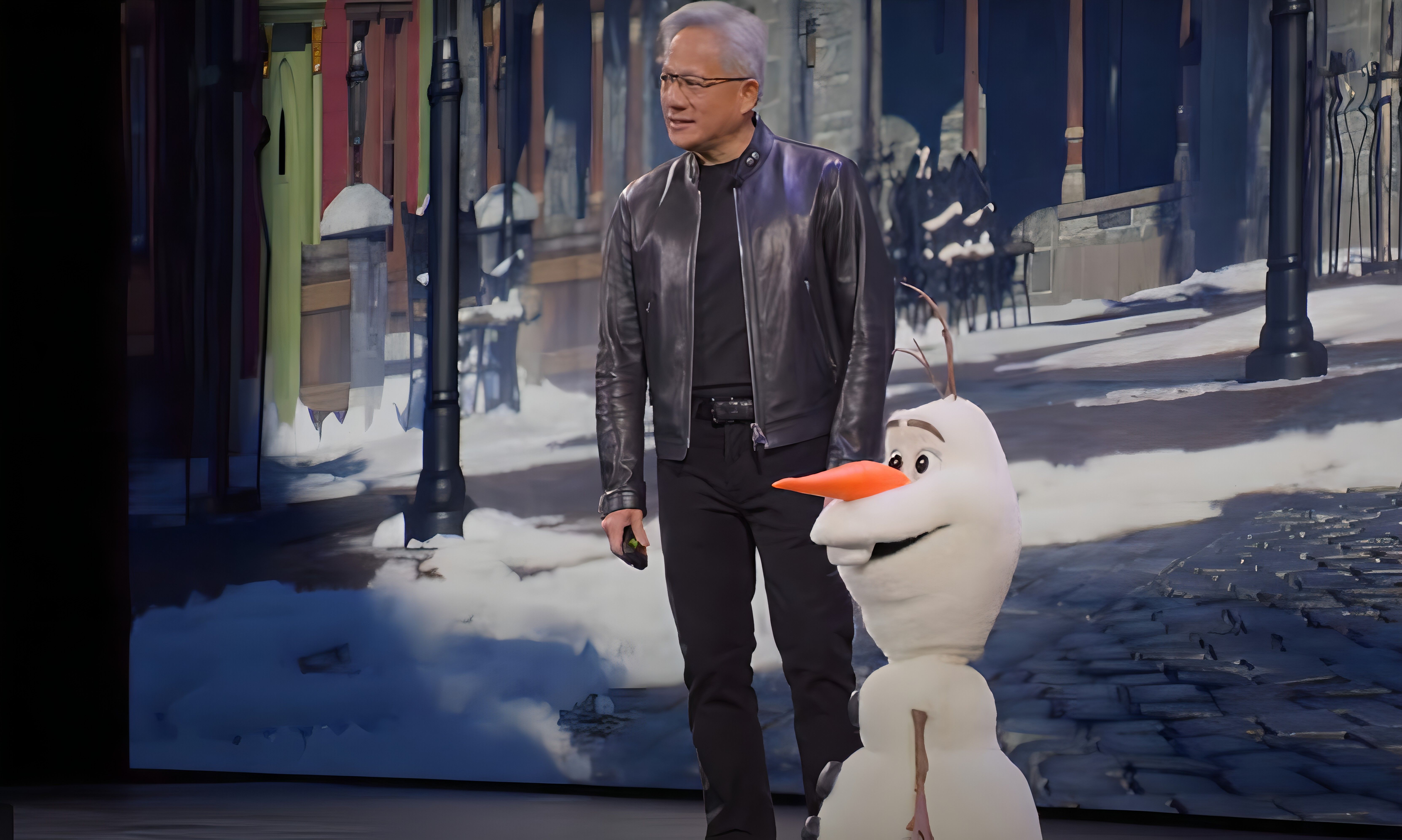
At Nvidia GTC, a surprising demo stole attention — a robot version of Olaf (the snowman from Frozen), highlighting how far AI-powered robotics has come.
🧠 What Happened
During the keynote, Jensen Huang showcased a robot built in collaboration with Disney that could walk, move, and behave like a real animated character.
The demo wasn’t just for fun — it showed how AI, simulation, and robotics are starting to merge into one system.
⚙️ More Than Just a Robot Demo
What’s interesting isn’t just the robot itself, but the stack behind it:
AI models for perception
Simulation systems for training movement
Agents that control real-world actions
Instead of manually programming every motion, these robots are increasingly trained using AI and simulation, making them more lifelike and scalable.
🚀 Why It Matters
This moment reflects a bigger shift:
• Robotics is moving from hardware → to AI-driven systems
• Characters and machines can now be trained, not just coded
• The line between virtual animation and physical robots is blurring
In simple terms, we’re moving toward a world where AI doesn’t just generate text or images — it controls real-world machines.
And that “robot snowman” demo? It’s a glimpse of that future.
💸 Are AI tokens the new signing bonus — or just the cost of using AI?

A new debate is emerging in the AI industry: should AI tokens be treated as a perk for employees, or simply a necessary business expense?
🧠 What Are AI Tokens in This Context
AI tokens are the units used to run models like ChatGPT, Claude, and Gemini — essentially the fuel behind AI systems. Companies are now experimenting with giving engineers dedicated token budgets so they can run agents, generate code, and automate work at scale.
Some leaders, like Nvidia’s Jensen Huang, have even suggested tokens could become a fourth component of compensation, alongside salary, equity, and bonuses.
⚙️ From Perk → Productivity Lever
The idea is simple: more tokens = more compute = higher productivity.
If an engineer has access to large token budgets, they can:
Run multiple AI agents
Automate workflows
Ship code faster
In theory, companies aren’t just paying employees — they’re investing in their output capacity.
🚀 Why This Debate Matters
Here’s where it gets interesting:
• Tokens don’t go into an employee’s pocket — they’re spent on company work
• Rising AI usage means token costs are becoming a major operating expense
• As agents run 24/7, token consumption (and cost) can scale rapidly
This creates a tension:
Is giving more tokens a “benefit”?
Or just giving employees the tools they need to do their job?
In reality, it may be both.
👉 AI tokens are starting to look less like perks and more like electricity for knowledge work — something every company must budget for.
And as AI adoption grows, managing token usage could become as important as managing headcount or salaries.
🤯 Cursor’s “new” AI coding model isn’t built from scratch — and that changes the game
AI coding startup Cursor has admitted that its latest model, Composer 2, was built on top of Kimi K2.5, an open-source model from Moonshot AI — after initially not disclosing it.
🧠 What Actually Happened
Cursor launched Composer 2 as a “frontier-level” coding model, but developers quickly spotted references to Kimi in the system.
The company later confirmed that:
Composer 2 started from Kimi K2.5 as a base
Cursor added its own training and reinforcement learning on top
Only a portion of the final model comes from the base — the rest is additional training
⚙️ Why This Is Important
This isn’t unusual technically — many AI systems are built on top of existing models.
But the controversy came from lack of transparency at launch, which raised questions about:
What counts as a “new” model
How much value comes from fine-tuning vs original training
Whether AI companies are becoming wrappers on top of other models
🚀 Why It Matters
This moment highlights a bigger shift in AI:
• The best products may not build models from scratch
• Instead, they stack, fine-tune, and optimize existing models
• Speed + distribution may matter more than raw model ownership
👉 In simple terms:
AI is becoming less about who builds the base model —
and more about who builds the best layer on top of it.
QUICK HITS
📰 Everything else in AI today
🗣️ ElevenLabs drops Conversational AI 2.0
🧠 OpenAI teases “ambient” hardware devices
💰 Anthropic hits $3B annualized revenue
🔐 Meta automating 90% safety reviews
🎥 Veo 3 used in millions of videos
Whenever you're ready, here are ways we can support each other:
Promote your product or service to 100K+ global professionals, AI enthusiasts, entrepreneurs, creators, and founders. [Contact us at [email protected]]
Refer us to your friends and colleagues to help them stay ahead in the latest AI developments. We've helped 30K+ creators, entrepreneurs, founders, executives, and others like you.